FPGA dynamics computing · in development
When the computation imitates physics.
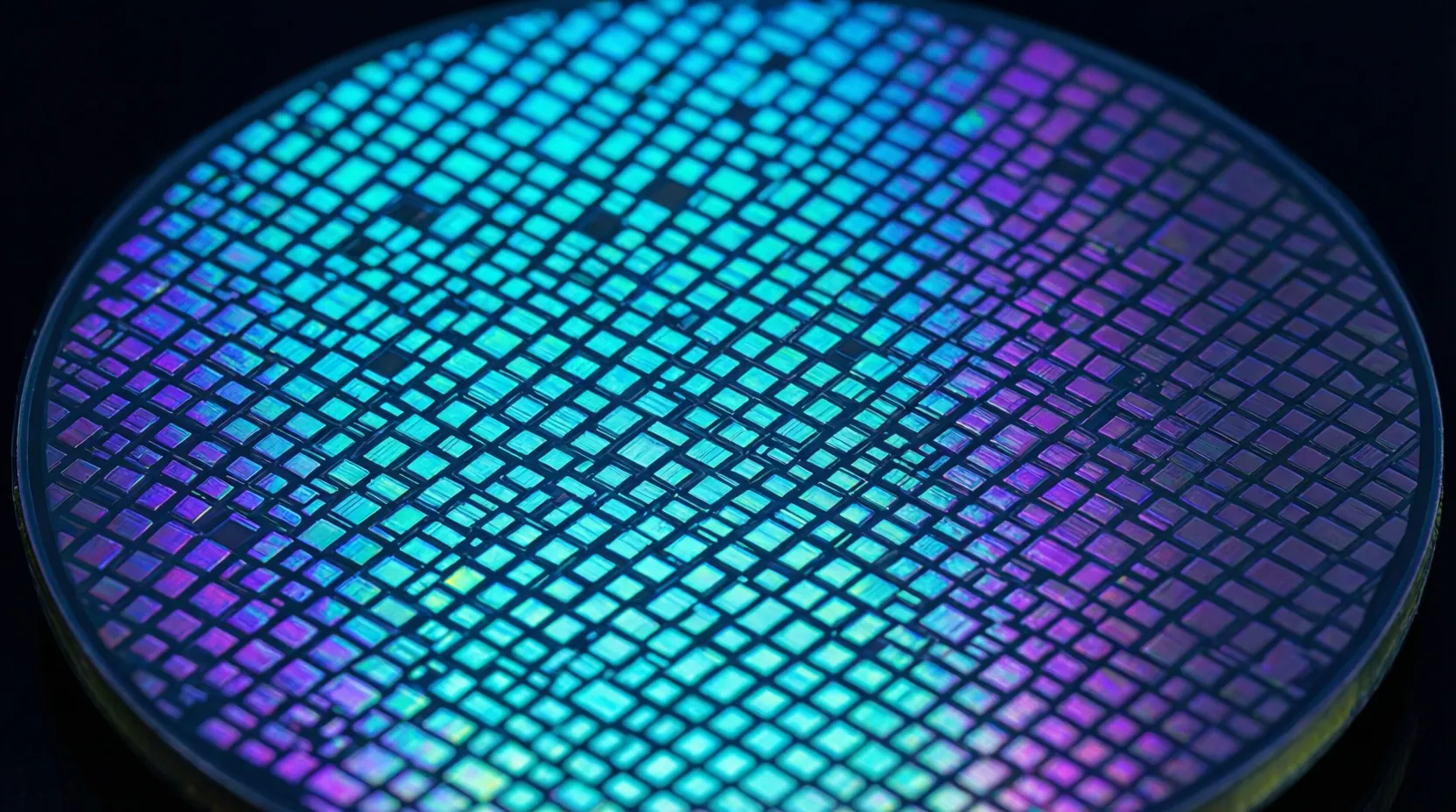
Many problems are dynamics: every cell looks at its neighbors and changes. On a GPU this becomes a program that shuffles memory back and forth. On an FPGA every cell becomes a small circuit, and all of them compute on the same clock cycle.
How it works
The technology behind it, without the marketing fog.
Cellular automata, diffusion and wave equations, Ising models: they all update a state from its neighborhood. A circuit maps exactly this structure directly — one update per cell and clock cycle.
A dynamics compiler translates the description of a system into hardware and checks the result bit for bit against a reference. If you can describe a rule, you do not have to draw a circuit.
It is not the arithmetic units that set the limits but wiring, memory bandwidth and number format. Fixed point requires care: rounding can shift conserved quantities such as energy or mass unless the design accounts for them.
Along with the result, the chip delivers a check word that is compared with the reference. A run is only complete when both match.
The research field: unconventional computing
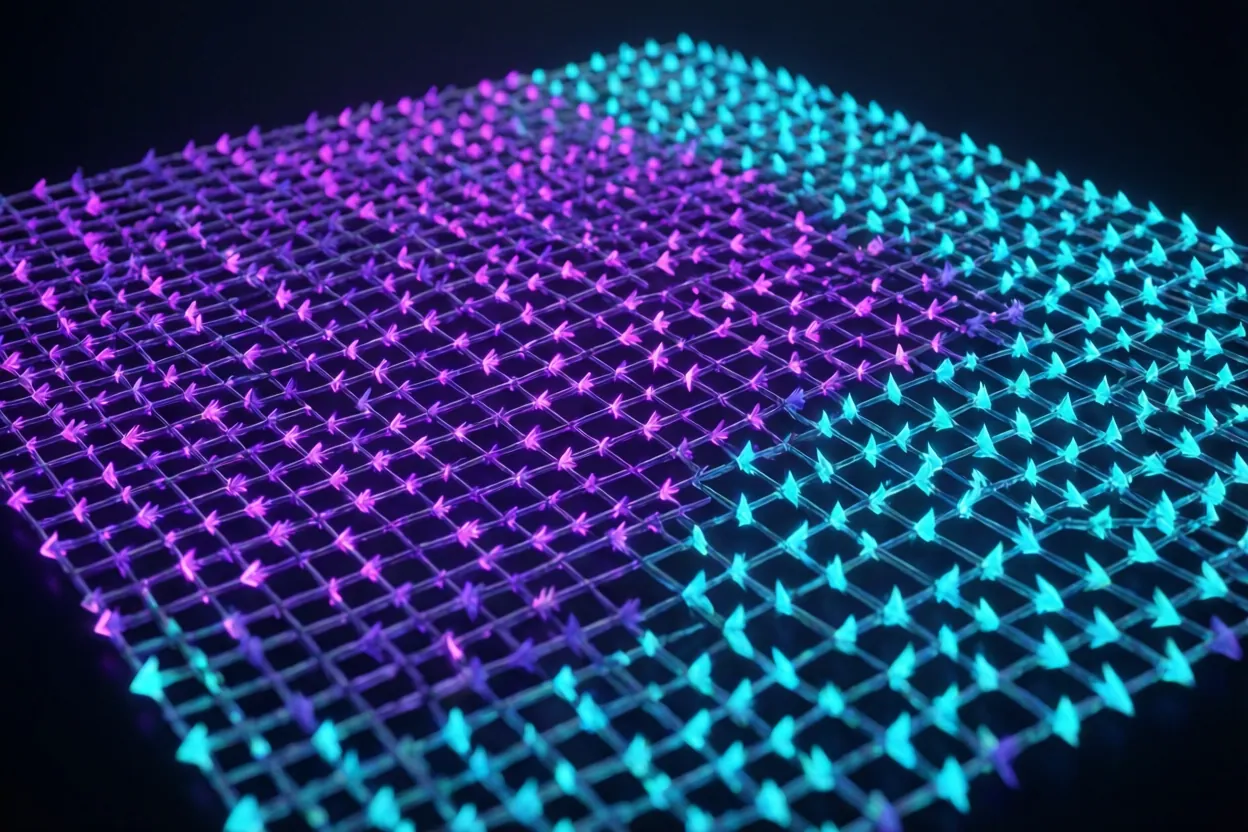
Ising machines solve combinatorial optimization by letting a physical system settle into a low-energy state: MaxCut, scheduling or portfolio selection can be written as the energy of a spin lattice. Optical, electronic and quantum-inspired variants are being researched worldwide.
Cellular automata are computationally universal despite the simplest rules, and many physical simulations are stencils at their core. The open question is for which problem classes a direct circuit actually beats a GPU — and at what size the wiring eats up the advantage again.
Open questions
- For which problems is a circuit faster or more economical than a program?
- How does a fixed-point dynamics stay physically faithful over long runs?
- How does an Ising system reliably find good solutions instead of local minima?
If the breakthrough succeeds
Outlook, not a promise: what would become possible once the open questions are answered.
Optimization in microseconds
If a planning problem — routes, shifts, machine allocation — could be reliably solved as a spin lattice on a chip, replanning would become a real-time process: immediately after every outage, not overnight.
Simulation at the edge
Flood, heat or dispersion models would run directly at the measurement site, with the energy budget of a small device instead of a data center.
Associative memory
Networks that recover stored patterns from noisy inputs in a single step would enable recognition without classic searching.
Where we stand
The same evidence as on the overview — every number with its kind.
- One update per cell and clock cycle, all cells in parallel
- Dynamics compiler: from model to circuit, bit-exact to the reference
- Results with a check word from the chip
Who it is for
- Research on optimization and physical simulation
- Industry with recurring planning problems
- Teams that need to lower the energy per computation step
Work on it with us.
We open pilots one by one. Briefly describe what you would like to compute — no payment, no commitment, an honest assessment.
Request a pilot